A market for the whole city
First an informal bazaar for the poor, then a legendary Soviet-era flea market.
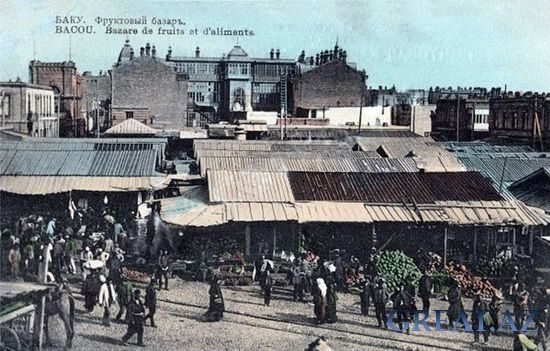
The tsarist-era bazaar
The bazaar arose informally beside the square in the 1840s and served the poorest residents — without name-brand shops or large stalls. Vegetables, fruit, and farm produce were sold here.
Goods were brought in by camel caravans and on carts drawn by donkeys and buffalo. In 1903 the square was cleared of farm trade, and in the first Soviet years the bazaar closed for good.
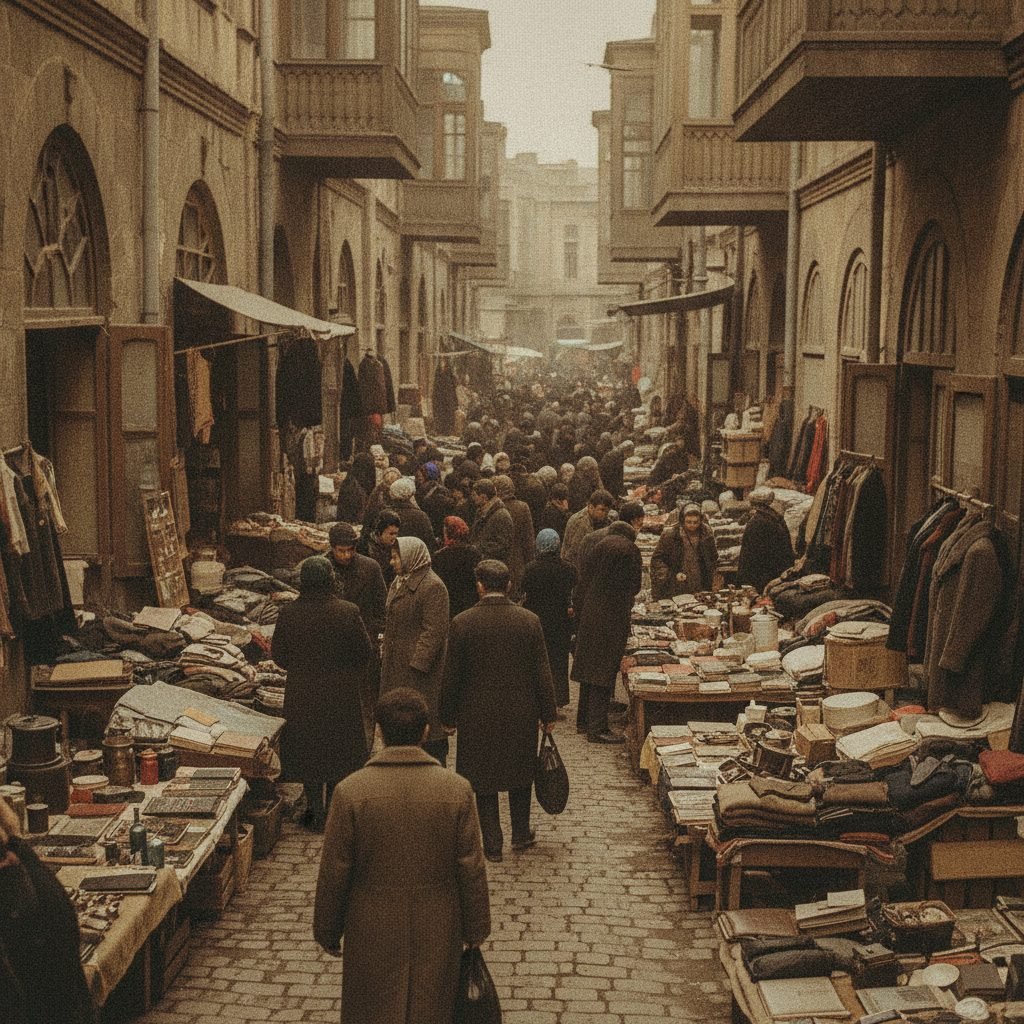
The Soviet flea market
In the USSR it was no longer the old bazaar but the quarter itself that made Kubinka famous: here scarce and foreign goods were sold under the counter — from fresh fish and fashionable shoes to household appliances, at any hour of the day or night.
The place had a reputation as a labyrinth with its own "unwritten laws", hard for outsiders to navigate. A characteristic anecdote has survived: a trader would put on three fur coats at once so as not to be caught.
What remains now
The historic bazaar and square as such are gone — in their place is Fizuli Square. The Soviet flea market lost its purpose once shortages disappeared.